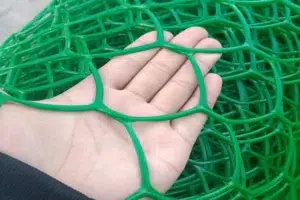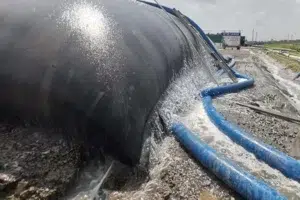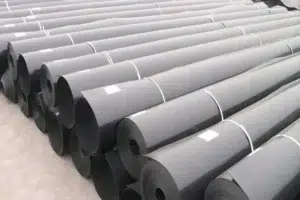
A liner can be specified correctly and still be damaged before service when sharp subgrade, aggregate, wrinkles, or cover placement are not controlled with a suitable protection layer.
A geomembrane underlay is commonly a nonwoven geotextile protection layer selected to help reduce puncture and abrasion risk between a liner and subgrade or adjacent materials. The final requirement depends on liner thickness, subgrade, stone size, load, installation method, drainage, and project design.
The useful question is not simply whether to use fabric, but what the liner touches, how it will be installed, and what damage conditions are likely before the system is covered.
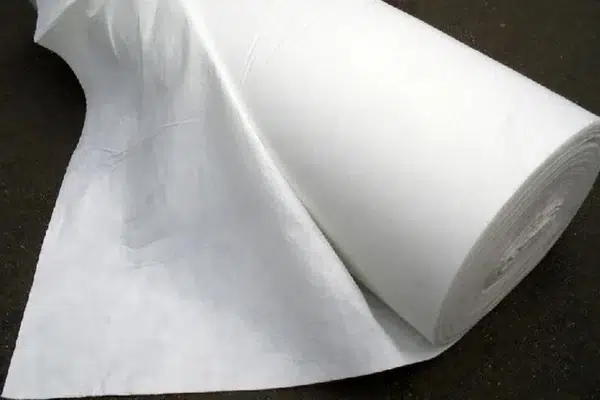
Send the liner section, subgrade description, stone or aggregate, liner thickness, cover method, quantity, destination, and required documents for an RFQ review.
Request a geomembrane underlay checkA geomembrane-underlay RFQ should state the application, liner type and thickness, subgrade condition, sharp-stone risk, adjacent aggregate, cover layer, loading, drainage, target geotextile properties, roll dimensions, quantity, destination, packaging, and project-required documents. A generic “underlay fabric” request leaves key puncture variables unknown.
Why Does a Geomembrane Need an Underlay?
An underlay can help separate the liner from irregular subgrade and reduce concentrated contact damage when the selected fabric and complete layer system fit the project.
A geomembrane may be placed over compacted soil, prepared subgrade, concrete, aggregate, or another geosynthetic. Each interface has a different abrasion and puncture condition. The protective layer must be selected for the actual contact surface and installation sequence, not only the liner product name.
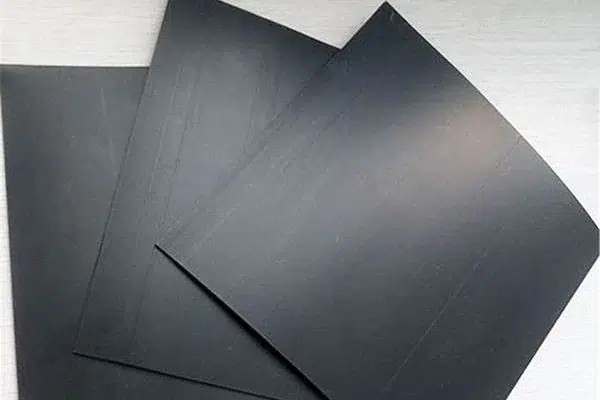
GRI GM13 is a useful HDPE geomembrane reference, but liner thickness and material properties do not eliminate the need to assess subgrade preparation and protection. The full system should be confirmed according to the project design. [1]
For contractors, underlay is often the difference between a clean liner deployment and a patching exercise. It should be installed as part of the liner detail, not added after a damage issue appears.
Which Site Conditions Control Underlay Selection?
Subgrade smoothness, stone size, liner thickness, contact pressure, aggregate, water, equipment, and cover placement determine which protection properties deserve attention.
A pond floor with well-prepared fine soil may have a different risk from a landfill base with drainage aggregate, a mining pad, or a containment area exposed to site traffic. The liner may also need protection above as well as below, depending on the layer stack.
The project should identify whether water can move under the liner or whether a drainage component is needed. An underlay fabric is not automatically a drainage design; its role should be clear in the approved section.
FHWA geosynthetic guidance emphasizes application conditions and installation requirements. Buyers should confirm the project environment before using a single property from a data sheet as the selection rule. [4]
| Project condition | What to confirm | Risk if missed |
|---|---|---|
| Smooth compacted subgrade | Surface finish, liner thickness, roll handling | Wrinkles or local abrasion |
| Rocky or irregular formation | Puncture resistance, preparation, cover method | Puncture and patching risk |
| Drainage aggregate interface | Cushioning, aggregate size, placement sequence | Concentrated loading damage |
| Traffic or cover placement | Protection above liner, equipment route | Tears before inspection |

What Properties Should Buyers Check?
The relevant checks can include puncture resistance, mass per area, thickness, tensile and elongation behavior, permeability, roll dimensions, and stated test methods, but the required values depend on the project.
ASTM D4833 and ASTM D6241 are puncture-related test methods used for geosynthetic comparison under defined procedures. Test results can help the project team compare materials, but they are not direct guarantees of field survival under every stone size, load, or installation method. [2] [3]
The selected geotextile must also be practical to handle. A roll that is too narrow can add seams; a roll that is too heavy for the equipment or site access can create handling damage and schedule pressure.
Expert Insight: Buying a heavier fabric only because it has a higher GSM can miss the real problem. The controlling risk may be a sharp subgrade, unsuitable aggregate placement, or no defined protection above the liner.
How Should Underlay Be Installed?
Underlay should be placed on the approved prepared surface with controlled overlaps, smooth contact, protected edges, and a sequence that prevents it from being displaced or damaged before the liner is deployed.
Remove protrusions and debris, control wrinkles, and avoid dragging aggregate or equipment across exposed fabric. The liner crew should have a clean work area so that trapped stones do not become point loads beneath the membrane.
The overlap and fixing detail should follow the drawing or project method statement. A protection layer that shifts during liner deployment can leave the critical interface uncovered.
Field Note: Many RFQs specify liner thickness but omit subgrade photos, stone size, and the cover sequence. Those omissions make a protection-fabric quote look precise while leaving the main puncture risk unresolved.
What Should Be Checked Before Shipment?
Check product data, stated tests, roll width and length, labels, batch traceability, packaging, loading plan, sample approval, and the project-specific layer sequence before production release.
Confirm which side of the liner the fabric is intended for and whether the quantity includes overlaps, slopes, anchorage allowances, and any protective layer above the liner. These details affect both material quantity and site handling.
QC Check: Compare the section drawing with the purchase order: liner thickness, underlay type, roll dimensions, pack method, destination, required documents, and installation sequence should all describe the same system.
What Should a Geomembrane Underlay RFQ Include?
A complete RFQ includes application, layer section, liner thickness, subgrade, aggregate, expected load, water condition, target fabric properties, roll size, quantity, destination, packaging, and required test documents.
Buyers can compare nonwoven geotextile protection layers, review the HDPE geomembrane liner, and submit the section through the geomembrane underlay RFQ form before ordering.
A reliable supplier should distinguish between a general material recommendation and a final project design. The responsible engineer should confirm the final specification where the risk depends on site conditions.
FAQs
Is nonwoven geotextile always required under geomembrane?
Not automatically. The need and specification depend on subgrade, liner type, aggregate, loading, water condition, installation method, and the approved project section.
Can a thicker liner replace geotextile underlay?
Not necessarily. Thickness and protection layer serve different roles. The project should evaluate puncture risk, subgrade preparation, contact materials, and installation conditions together.
What is needed for an underlay quotation?
Provide the section drawing, liner type and thickness, subgrade, stone or aggregate, cover method, drainage condition, target roll size, quantity, destination, packaging, and document requirements.
Conclusion
Geomembrane underlay is a contact-risk decision. Confirm the subgrade, liner, aggregate, loading, drainage, handling, and required protection on both sides of the membrane before purchasing fabric.