A drainage geotextile can lose its intended flow path when the soil-filter relationship, overlap, aggregate placement, outlet, and site protection are treated as afterthoughts.
Drainage geotextile installation works when the fabric, soil, aggregate, overlap, water path, outlet, and placement method are matched to the approved drainage detail. The right overlap is not a universal number; it depends on the project design, subgrade condition, installation method, and expected water behavior.
Before a roll is ordered, buyers should identify what the fabric must do: filter soil, separate aggregate, protect a drain, or support drainage through a layered system.
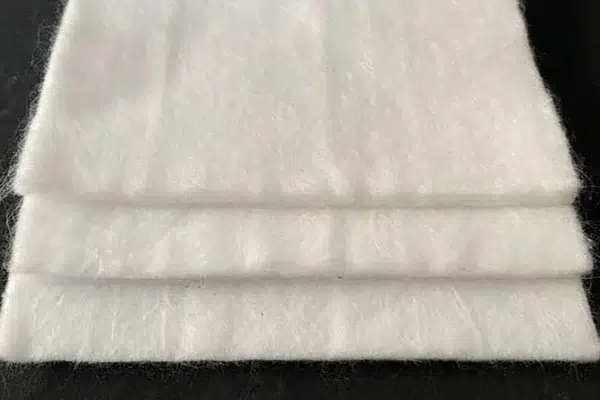
Send the drainage section, soil description, aggregate, water condition, outlet, roll size, quantity, destination, and requested tests for an RFQ review.
Request a drainage fabric checkA drainage-geotextile RFQ should state the application, soil condition, aggregate, water path, outlet, expected flow condition, required function, target properties, roll width and length, placement method, overlap detail, quantity, destination, packing, and required test documents. GSM alone cannot confirm a stable filter and drainage detail.
What Does a Drainage Geotextile Need to Do?
A drainage geotextile may provide filtration, separation, protection, or a combination of functions, but the required role must be tied to the soil, aggregate, water path, and project section.
A fabric behind a retaining wall, around a trench drain, under aggregate, or beside a pipe does not experience the same soil and water conditions. The selection should identify whether the priority is preventing fines migration, maintaining flow, protecting a membrane, or separating layers.
FHWA guidance treats geosynthetics as application-dependent components. The soil condition, hydraulic condition, aggregate, and installation method should be reviewed before using a generic nonwoven fabric description. [1]
The final filter design belongs to the responsible project team. A material data sheet can support the comparison, but it cannot replace soil information and a defined outlet.
Which Properties Affect Drainage and Filtration?
Apparent opening size, permittivity, puncture resistance, thickness, soil behavior, aggregate, and confinement can affect how a geotextile performs within a drainage detail.
ASTM D4491 describes water permeability by permittivity under stated testing conditions and cautions that field performance depends on application and environmental conditions. It is useful for comparing products, not proof that any fabric will keep every drain flowing. [2]
ASTM D4751 covers apparent opening size. Opening size and permittivity should be considered together with the soil gradation and hydraulic condition, because a wide opening alone does not establish a stable filter relationship. [3]
A contractor should also consider puncture and handling. A fabric that is damaged under aggregate loses continuity at the very point where soil separation and water movement are needed.
| Project condition | What to confirm | Risk if missed |
|---|---|---|
| Fine soil near aggregate | Opening size, soil behavior, water condition | Fines migration or clogging |
| Drainage trench | Roll width, wrap detail, outlet, aggregate | Open seams or poor drainage path |
| Coarse stone placement | Puncture resistance and cover method | Tears and loss of separation |
| Long drainage blanket | Overlap, edge treatment, equipment route | Displaced fabric or excess joints |
How Should Drainage Geotextile Be Installed?
Install the fabric on a prepared surface with the approved overlap, protected edges, controlled aggregate placement, and a clear outlet path. Do not treat overlap as the only installation control.
Remove sharp objects, avoid wrinkles that create a fold in the drainage plane, and keep the fabric clean before cover placement. Place aggregate in a way that does not drag, tear, or displace uncovered fabric.
The approved drawing should define overlap and wrap details. If it does not, the project team should confirm the detail rather than use a copied rule from an unrelated road, trench, or wall project.
Factory Tip: Check the roll width against the drainage section before ordering. A roll that looks economical can create extra overlap, difficult trench wrapping, and more exposed edges if its dimensions do not suit the installed detail.
Which Mistakes Reduce Flow or Create Rework?
Common mistakes include choosing only by GSM, using the wrong opening-size range for the soil, leaving the outlet undefined, damaging fabric with stone, folding it into the drainage path, and allowing fines to enter from unprotected edges.
A drainage layer needs a route from inflow to outlet. A fabric cannot correct a blocked pipe, a closed outlet, or uncontrolled sediment washing into the aggregate after installation.
ASTM D4833 provides an index puncture test for geosynthetics. The final required resistance still depends on aggregate, cover thickness, site handling, and construction exposure. [4]
Field Note: Many buyers ask for a heavier fabric when flow is the real problem. More mass per area does not automatically solve a poor soil-filter match, damaged outlet, or aggregate layer filled with fines.
What Should Buyers Check Before Ordering?
Buyers should verify application, soil, aggregate, water condition, target properties, roll dimensions, overlap detail, installation method, labels, packaging, traceability, and project-required test documents.
Ask the supplier to identify which values are stated on the data sheet and which variables remain project-specific. This prevents a general product recommendation from being mistaken for a completed drainage design.
QC Check: Before bulk production, review the sample, data sheet, stated test methods, roll width and length, packaging, labels, batch information, placement sequence, and outlet detail. Confirm the quantity includes the approved overlaps and edge treatment.
What Should a Drainage Geotextile RFQ Include?
The RFQ should include the drainage section, soil, aggregate, water path, outlet, target function, target properties, roll size, quantity, destination, packing, installation detail, and required documents.
Clarify whether the material wraps a trench, separates a road base, protects a pipe, supports a retaining-wall drain, or lines a drainage blanket. Each use changes the questions about soil, overlap, puncture risk, and flow path.
Buyers can compare nonwoven drainage geotextile options, review drainage layer materials, and submit the detail through the drainage geotextile RFQ form before procurement.
FAQs
Is a heavier drainage geotextile always better?
No. Mass per area is only one property. The final choice depends on soil, opening size, permittivity, puncture risk, aggregate, water condition, installation method, and the approved drainage detail.
What overlap should drainage fabric use?
Use the approved project overlap. The required detail depends on the application, subgrade, placement method, water condition, and fabric layout.
Can drainage fabric fix a blocked outlet?
No. The drainage system needs a defined and functioning outlet. Fabric supports filtration and separation; it does not replace drainage design or maintenance.
Conclusion
Drainage geotextile is a filter-and-installation decision, not a GSM purchase. Confirm soil, opening size, flow, overlap, aggregate placement, outlet, roll dimensions, and inspection requirements before ordering.