Lucas

As a professional technical consultant at MJY Geosynthetics Company, I have over ten years of industry experience and possess in-depth knowledge of the company's various products – from technical parameters and material characteristics to corresponding construction methods. To date, I have provided services to clients in more than 40 countries and regions, accumulating extensive practical experience in multinational projects and developing a systematic understanding of geosynthetic applications, construction practices, and industry standards in different markets.

Nonwoven geotextile fabric roll used under gravel for soil separation and filtration

Geotextile Under Gravel: Fabric Type, Overlap, and Installation Mistakes

Gravel disappears into weak ground when the separation layer is ignored or the wrong fabric is placed below the base. Geotextile under gravel should be selected by subgrade strength, drainage need, aggregate sharpness, traffic, and installation method. Nonwoven fabric is commonly used for separation and filtration, while woven fabric may suit projects that also need […]

Geotextile Under Gravel: Fabric Type, Overlap, and Installation Mistakes Read More »

Expanded HDPE geocell panel for slope protection erosion control and infill confinement

Geocell Slope Protection: When It Works and What Specs Matter

A slope may look stable in dry weather, then lose infill after heavy runoff because anchoring and drainage were treated as secondary details. Geocell slope protection works when the cellular confinement system, anchor layout, cell depth, infill, drainage path, and slope condition are designed together. It can control erosion and hold infill on many slopes,

Geocell Slope Protection: When It Works and What Specs Matter Read More »

Geonet drainage roll used to create a high flow drainage path in civil engineering systems

Geonet Drainage Layer: Applications in Landfills, Retaining Walls, and Roads

A drainage layer can look open in a sample yet lose flow capacity after compression, installation damage, or clogging is ignored. A geonet drainage layer creates an in-plane flow path beside or beneath soil, liner, or cover layers. It is used in landfill, retaining wall, road, and drainage geocomposite systems when transmissivity, compressive resistance, gradient,

Geonet Drainage Layer: Applications in Landfills, Retaining Walls, and Roads Read More »

Textured HDPE geomembrane surface used to improve interface friction on slopes and landfill liner systems

Textured Geomembrane vs Smooth Geomembrane: Avoid Wrong Liner Specs

Smooth and textured geomembranes can look like a small surface choice, but that choice can change slope safety and installed cost. Textured geomembrane is usually selected where interface friction matters, such as slopes, landfill sidewalls, and lined containment areas with cover soil. Smooth geomembrane is often easier to weld, handle, and inspect on flat or

Textured Geomembrane vs Smooth Geomembrane: Avoid Wrong Liner Specs Read More »

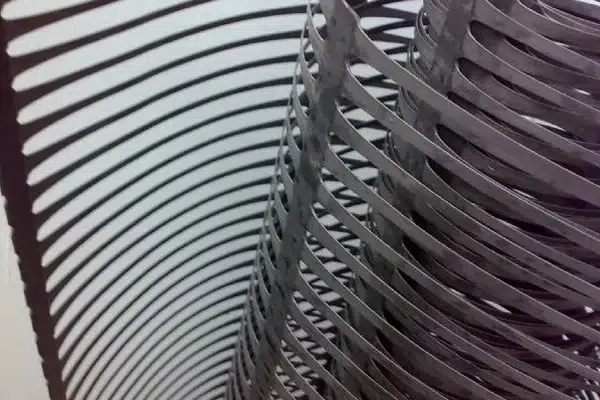
Uniaxial plastic geogrid material used for retaining wall and slope soil reinforcement

Geogrid Material Guide: PP, PET, Fiberglass, and Steel-Plastic Options

Geogrid material is often compared by appearance, but the material decides creep, elongation, coating, and project fit. Geogrid material may be PP, HDPE, PET, fiberglass, basalt, or steel-plastic composite. Buyers should choose by tensile direction, elongation, long-term design strength, creep behavior, coating, aperture stability, installation damage risk, and application, not only by price per roll.

Geogrid Material Guide: PP, PET, Fiberglass, and Steel-Plastic Options Read More »

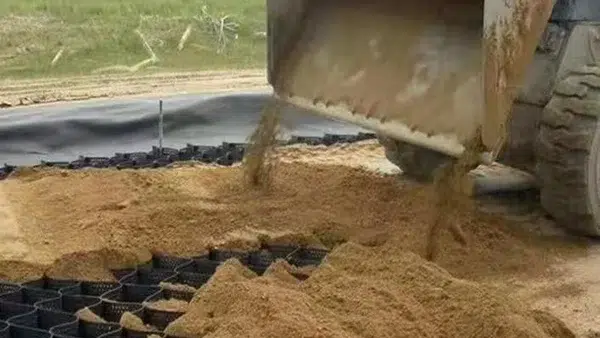
HDPE geocell expanded panel used for roads slopes and erosion control cellular confinement

HDPE Geocells for Roads, Slopes, and Erosion Control

HDPE geocells can stabilize weak ground, but wrong cell height or weak welds can turn a good design into site rework. HDPE geocells, also searched as geoceldas, are cellular confinement systems used for road base support, slope protection, erosion control, channels, and weak soil stabilization. Selection should consider cell height, weld spacing, strip thickness, surface

HDPE Geocells for Roads, Slopes, and Erosion Control Read More »

Geotextile and geomembrane layer comparison for containment drainage and protection functions

Geotextile and Geomembrane: Avoid Using the Wrong Layer

Many liner systems fail on paper before installation because geotextile and geomembrane are treated as the same layer. Geotextile and geomembrane are different geosynthetics: geomembrane provides containment, while geotextile usually provides filtration, drainage, separation, reinforcement support, or liner protection. The right choice depends on water control, soil movement, puncture risk, and project acceptance requirements. The

Geotextile and Geomembrane: Avoid Using the Wrong Layer Read More »

Retaining wall geogrid roll used to plan reinforcement length and tensile direction

Retaining Wall Geogrid Length: Avoid Short Embedment Before Backfill

A retaining wall can look finished while the hidden geogrid is too short to do its job. Retaining wall geogrid should extend far enough behind the wall to create a stable reinforced soil mass. The required length depends on wall height, surcharge, soil type, slope, drainage, facing system, long-term design strength, and pullout resistance. Do

Retaining Wall Geogrid Length: Avoid Short Embedment Before Backfill Read More »

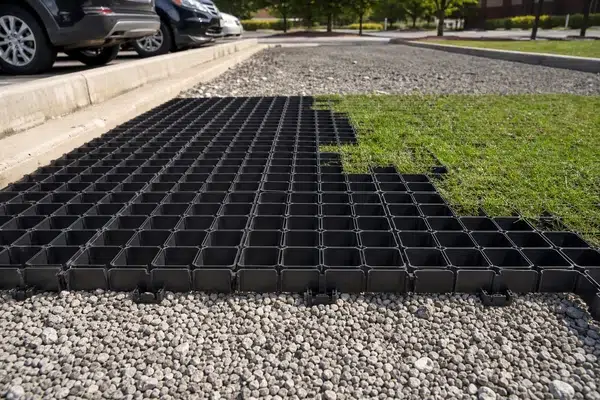
Grass Grid Parking Lot Guide: Base Prep Checks Before Ordering

Grass grid parking lots fail early when the plastic grid is expected to compensate for a weak base. Grass grid for parking lots should be selected by traffic category, base thickness, compaction, drainage, soil bearing condition, infill type, edge restraint, and HDPE paver height. The grid distributes load, but the base still carries most of

Grass Grid Parking Lot Guide: Base Prep Checks Before Ordering Read More »

en_USEnglish

Get Free Quote!