A drainage system can fail when geonet and geotextile are treated as interchangeable rolls, even though one is often selected for in-plane drainage and the other for filtration, separation, or protection.
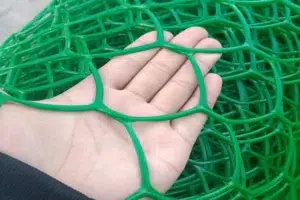
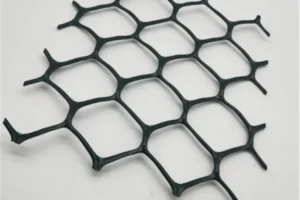
Geonet and geotextile perform different drainage-layer functions. A geonet is commonly used to create an in-plane flow path, while a geotextile can filter, separate, cushion, or protect adjacent layers. Many engineered details use both materials together.
For landfill, retaining-wall, slope, and containment buyers, the material name is only the starting point. The project needs to identify where water enters, how it travels, what compressive load acts on the layer, whether fines can clog the system, and how the components connect at outlets or collection pipes.
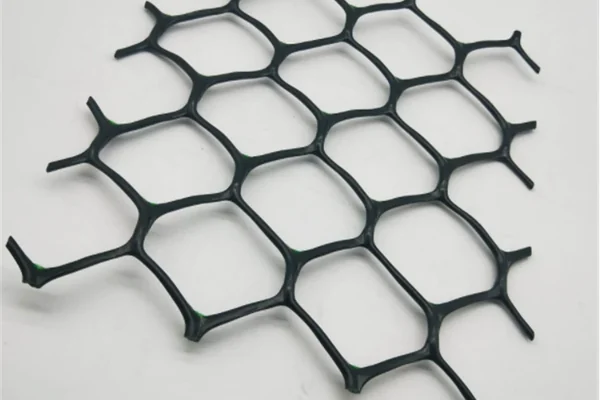
Send the section drawing, water path, expected load, adjacent materials, area, quantity, destination, and required test standard for a geonet and geotextile review.
Request a drainage layer checkA complete RFQ should identify whether the material is needed for drainage flow, filtration, separation, protection, or a composite function. Include the application, overburden or compressive condition, expected liquid, temperature if relevant, adjacent soil or aggregate, roll size, panel layout, outlet detail, quantity, destination, and project-required documentation.
What Is the Functional Difference Between Geonet and Geotextile?
Geonet is generally selected for water movement along its plane, while geotextile is generally selected for water passage through the fabric and for filtration or separation. The right system may combine a drainage core with geotextile filter layers.
A geonet’s drainage path can be affected by compressive load, creep, interface contact, flow direction, and outlet design. ASTM D4716 provides a test method for in-plane flow rate per unit width of geosynthetic products. The test result is useful for comparing stated data, but the final transmissivity requirement depends on the project section and loading condition. [1]
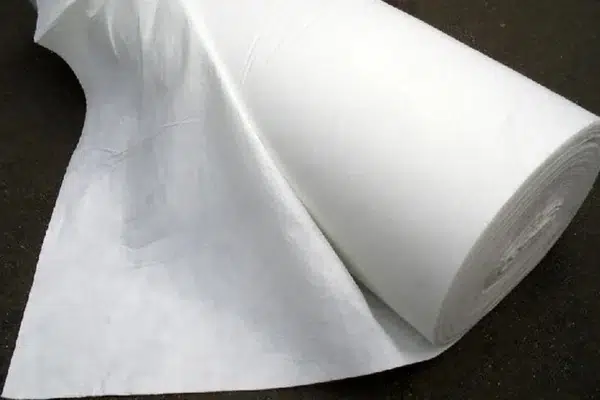
A geotextile can allow water to pass through the plane of the fabric while controlling soil movement when the filter relationship is appropriate. Its performance is not the same as an in-plane drainage core. Conflating the two functions can create a system with no reliable flow path or no suitable filter protection.
When Should the Detail Use Both Materials?
Both materials are often considered when the design needs a protected in-plane drainage path: geotextile can sit next to soil or aggregate as a filter, while geonet can carry water toward a collection point. The exact configuration belongs to the approved section.
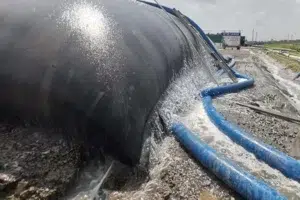
In a retaining-wall drainage detail, for example, the project may need a filter between soil and the drainage layer, a drainage path behind the facing, and a controlled outlet. In a landfill or containment system, the interface conditions, liquid, compression, and protection requirements can be different. FHWA guidance reinforces the need to select geosynthetics by application rather than by a generic product name. [4]
| Component | Main function | Key buyer check | Risk if misused |
|---|---|---|---|
| Geonet | In-plane drainage path | Transmissivity under load, outlet detail, creep | Flow path is reduced or not connected |
| Geotextile | Filtration, separation, cushioning | Opening size, permittivity, puncture exposure | Fines migration, clogging, or damage risk |
| Drainage composite | Combined drainage and filter layers | Bonding, interfaces, compression, project section | Composite is specified without reviewing both functions |
| Aggregate drain | Traditional drainage medium | Gradation, filter, thickness, access | Clogging or an impractical excavation detail |
Which Specifications Should Buyers Compare?
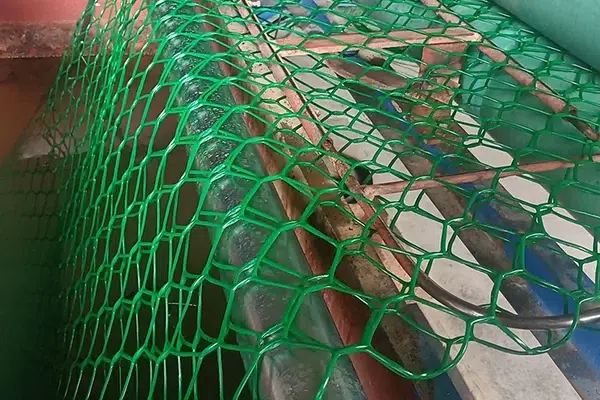
For geonet, buyers should compare the stated in-plane flow property, test conditions, thickness or structure, compressive exposure, roll dimensions, interfaces, and outlet layout. For geotextile, opening size, permittivity, puncture resistance, strength, and filtration compatibility may be more relevant.
ASTM D4491 and ASTM D4751 provide methods for describing geotextile permittivity and apparent opening size. These are useful procurement data points, but the values must be evaluated with the soil and hydraulic requirement. A higher number in one data-sheet line does not automatically make the fabric safer for the full drainage detail. [2] [3]
The same caution applies to geonet transmissivity. Buyers should request the stated test condition and not assume an unloaded laboratory value describes the flow capacity after installation beneath a project-specific cover load.
What Installation Risks Affect a Drainage Layer?
Drainage layers can lose function through crushed or displaced cores, blocked outlets, damaged geotextile filter layers, unprotected edges, poor overlap or connection details, and uncontrolled fines entering the system before it is closed.
The installer needs a sequence that protects the drainage core, keeps filter layers continuous where designed, and connects the drainage route to the intended collection point. The detail should also address how rolls are handled, how seams or overlaps are arranged, and how adjacent materials are placed without dragging or crushing the system.
Expert Insight: A geonet quoted as a cheaper replacement for an aggregate drain is not automatically a cost saving. The project must still prove a workable flow path, cover condition, filter relationship, and outlet arrangement. Reduced excavation does not remove drainage design responsibility.
What Should Be in a Geonet or Geotextile RFQ?
A drainage-material RFQ should state the application, drainage function, section drawing, soil or liquid exposure, compressive condition, adjacent materials, target properties, roll size, quantity, destination, outlet detail, and requested test documents.
State whether the system is for a retaining wall, landfill, slope, pond, or another drainage condition. Buyers can review geonet drainage layer options, compare geotextile filtration materials, and send the full section through the drainage specification request form before order release.
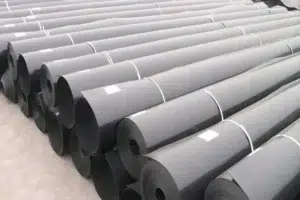
QC Check: Before confirming production, request the applicable data sheets, stated test methods and conditions, roll dimensions, packaging, labels, batch traceability, interface description, outlet accessories if relevant, and required project documents. The final selection should be confirmed against the project design.
FAQs
Can geonet replace geotextile?
Not generally. Geonet and geotextile have different primary functions. A geonet may provide an in-plane flow path, while a geotextile may filter or separate adjacent materials. The project detail determines whether one or both are needed.
Can geotextile drain water in the same way as geonet?
Geotextile can pass water through its plane when appropriate, but it is not automatically an in-plane drainage core. Compare the required flow direction and project section before selecting material.
What must be checked before ordering a drainage layer?
Confirm function, flow path, load, soil or liquid condition, filter requirement, outlet detail, roll layout, properties and test conditions, quantity, packaging, and required documents.
Conclusion
Geonet and geotextile solve different drainage problems. Select the full layer system by flow path, filter requirement, compression, installation sequence, and outlet detail, not by roll price alone.