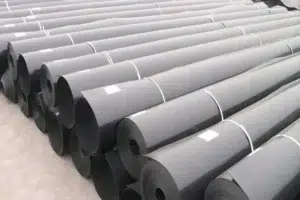
A landfill liner is easy to reduce to a thickness and price per square metre, but the real risk sits in the complete containment section: subgrade, surface texture, protection layers, seams, drainage, and inspection access.
HDPE liner is commonly selected for landfill containment when thickness, surface finish, puncture protection, seam procedure, chemical exposure, and project-specific quality requirements match the engineered design. A lower liner price does not make a safer landfill system when it creates welding, damage, or acceptance risk.
Landfill buyers need to separate general product information from regulatory and project-design requirements. The local authority, designer, and owner define the final containment system. A supplier can support specification comparison, but cannot replace the required environmental, geotechnical, or hydraulic design.
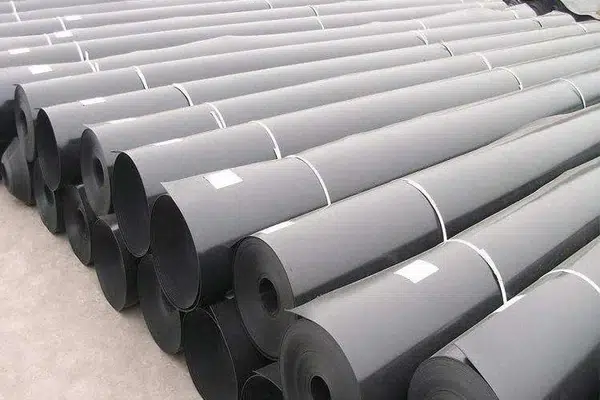
Send the containment section, liner thickness or project requirement, slope detail, protection layer, quantity, destination, and required test documents for an RFQ review.
Request a landfill liner checkA useful landfill liner RFQ identifies the application area, liner polymer, smooth or textured surface, thickness basis, roll or panel size, expected welding method, subgrade and protection detail, quantity, delivery constraints, quality documents, and required test standards. This prevents a generic HDPE roll quote from being compared with a project-specific liner system.
Why Is HDPE Used in Landfill Liner Systems?
HDPE geomembrane is often considered where low permeability, chemical-resistance requirements, and controlled field seams are part of an engineered containment system. The final specification depends on the waste stream, temperature, hydraulic conditions, slope interfaces, protection, and applicable regulatory requirements.
The US EPA describes municipal solid waste landfills as engineered facilities with environmental controls. The liner is one part of that broader system, alongside collection, drainage, cover, monitoring, and operational controls. A material data sheet should therefore be reviewed against the actual landfill design rather than treated as a stand-alone compliance statement. [4]
GRI GM13 is a manufacturing quality-control specification for HDPE geomembranes. It provides a useful framework for reviewing stated properties, while individual projects may require more restrictive conditions or different acceptance requirements. [1]
How Should Buyers Discuss Liner Thickness?
Thickness should be discussed with puncture exposure, subgrade preparation, cover placement, drainage aggregate, traffic, welding method, and required design life. A thicker sheet can change puncture and handling behavior, but it is not automatically the correct system choice.
A well-prepared fine-grained surface presents a different installation exposure from a section with angular stone, drainage material, or irregular concrete. Buyers should ask what sits above and below the liner, how the liner will be deployed, and whether a cushioning or protection layer is specified. ASTM D4833 is an index puncture test method that can help compare documented material data; it does not substitute for the actual interface evaluation. [2]
| Landfill condition | Key confirmation | Risk if missed |
|---|---|---|
| Base liner over prepared subgrade | Surface smoothness, water condition, panel layout | Damage or difficult seam access |
| Slope liner | Texture, interface friction, anchoring detail | Slip or inappropriate surface selection |
| Drainage or aggregate interface | Protection layer and puncture requirement | Localized puncture during placement |
| High-quality-control area | Welding plan, test records, panel identification | Inspection delay or rework |
When Does Textured Geomembrane Matter?
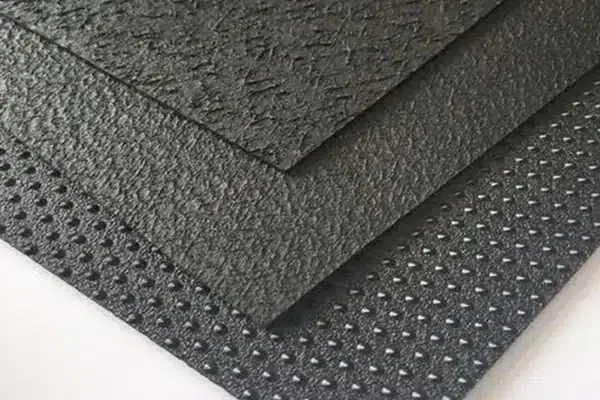
Textured geomembrane is generally considered where interface friction is part of the slope or lining design. Smooth material may be appropriate in other locations when the project section supports it. The surface decision belongs to the design, not to a general price comparison.
Texture can affect interface behavior, handling, welding planning, and material cost. The project should state which areas need a textured surface and what layer sits against it. Ordering every panel as textured without a section-based reason may add cost and complicate panel planning without improving the intended design function.
Why Are Protection Layers and Seams Critical?
Protection layers address specified exposure from subgrade or adjacent materials, while seam control connects panels into a continuous liner. Neither one can correct an unsuitable section design or unplanned construction sequence.
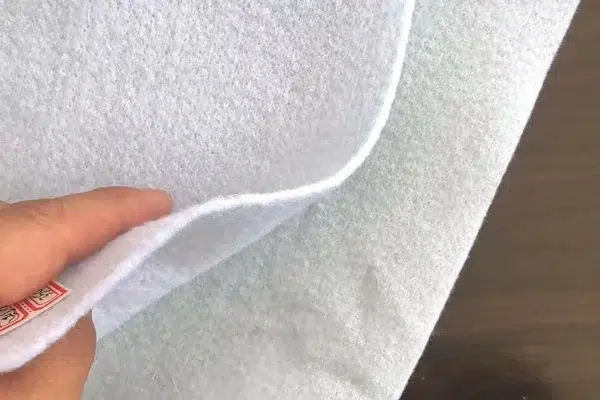
A nonwoven geotextile may be included as a cushioning layer where the project section requires it. Seams need a defined procedure, trial seams, inspection, testing, repair process, and records. ASTM D6392 provides destructive seam-test methods for nonreinforced geomembranes; the project quality plan must still set the acceptance criteria and frequency. [3]
Panel layout also deserves attention before shipment. Roll width, available welding lanes, penetrations, slope transitions, and the order in which other trades enter the lined area can change the number of seams and the time available for inspection. A layout that looks efficient on a quantity schedule may be difficult to deploy if access roads, wind exposure, or protection-layer placement are ignored.
QC Check: Before bulk production, compare the approved data sheet, liner surface, roll labels, batch traceability, panel layout, protection material, welding procedure, test plan, packaging, and delivery sequence. Small mismatches at this stage can become expensive field changes after deployment begins.
What Should Be in a Landfill Liner RFQ?
A landfill liner RFQ should state the containment application, design section, liner type and surface, thickness requirement, slope detail, protection layers, panel or roll preference, quantity, destination, test documents, and inspection requirements.
Include liquid or leachate exposure and temperature when relevant to the project team. Buyers can review HDPE geomembrane liner options, compare landfill application information, and send the drawing through the project specification form before procurement release.
FAQs
Is a thicker HDPE landfill liner always better?
No. The final choice depends on the containment design, puncture exposure, interface condition, welding plan, protection layer, and project acceptance requirements.
Can geotextile replace subgrade preparation?
No. A protection layer can support an engineered liner section, but it does not remove the need to prepare the subgrade and control sharp or unsuitable interfaces.
Which documents should buyers request?
Request stated material properties and test methods, roll dimensions, labels, batch traceability, panel layout information, packaging, and project-required quality documents.
Conclusion
HDPE landfill liner selection is a system decision. Confirm thickness, texture, interfaces, protection, seam control, inspection, and RFQ details before comparing material price.