A cellular confinement panel can improve a facing or slope detail, but it should not be treated as a substitute for a retaining-wall design when soil loads, drainage, geometry, and global stability have not been addressed.
Geocell can be a useful retaining-wall or reinforced-slope facing option when cell depth, anchoring, infill, slope angle, drainage, and the approved structural detail match the project. It is not automatically suitable for every wall height or load condition.
Buyers often see the word ‘retaining wall’ and request a panel thickness or cell depth before sharing the wall geometry. A workable recommendation starts with the wall height, slope or face angle, backfill, drainage, foundation condition, surcharges, facing detail, and the engineer’s intended function for the cellular layer.
Send the section drawing, wall height, face angle, soil and drainage information, proposed infill, area, quantity, and destination for a project-based RFQ review.
Request a geocell wall checkFor a meaningful quotation, identify whether geocell is intended for erosion control, a vegetated facing, surface confinement, an access slope, or a structural reinforcement detail designed with other elements. Include cell depth, material type if specified, weld spacing, panel dimensions, anchoring concept, infill, expected exposure, quantity, delivery access, and required test documents.
When Is Geocell a Better Fit Than a Conventional Wall Detail?
Geocell can make sense where the project needs surface confinement, erosion control, a vegetated face, or controlled infill on a slope or stepped detail. A conventional structural wall may be required where the project relies on a defined load-bearing, reinforced-soil, or gravity-wall design.
The difference is the engineering function. Cellular confinement helps hold selected infill in place and can support a surface treatment. It does not remove the need to evaluate slope stability, bearing condition, drainage, external loads, and the connection between facing and any reinforcement layers.
FHWA design guidance is useful context because it evaluates geosynthetics as part of an engineered soil system. For retaining structures, the final wall concept and reinforcement design should be verified by the responsible engineer. [1]
The International Geosynthetics Society provides educational material on geosynthetic applications, but project selection still requires a site-specific review. A product category can inform the conversation; it cannot define the wall design, responsibility, or permitted construction sequence. [2]
Which Geocell Details Control the Result?
Cell depth, weld spacing, panel dimensions, anchoring, infill gradation, face angle, drainage, and installation access all affect whether a geocell facing can be placed and maintained as intended.
A deeper cell is not automatically the correct answer. The required configuration depends on slope geometry, infill, exposure, hydraulic condition, and the approved detail. The project should identify what the cells are expected to confine and how the panel is held at the crest, toe, or intermediate anchor locations.
Terminology also matters in the RFQ. ASTM D4439 helps establish common geosynthetics terms, while the commercial description still needs to state the project function and physical panel details. This avoids treating a generic cellular panel description as a complete engineered wall specification. [3]
| Project condition | Main detail to confirm | Risk if missed |
|---|---|---|
| Vegetated slope face | Cell depth, soil infill, anchoring, erosion control | Soil loss or uneven establishment |
| Aggregate-faced slope | Aggregate size, cell depth, toe detail, drainage | Infill movement or poor surface confinement |
| Stepped retaining detail | Wall geometry, reinforcement design, facing connection | Geocell is treated as the whole structure |
| Water-affected slope | Drainage path, filter layer, erosion exposure | Water pressure or washout is ignored |
How Do Anchoring and Infill Affect Installation?
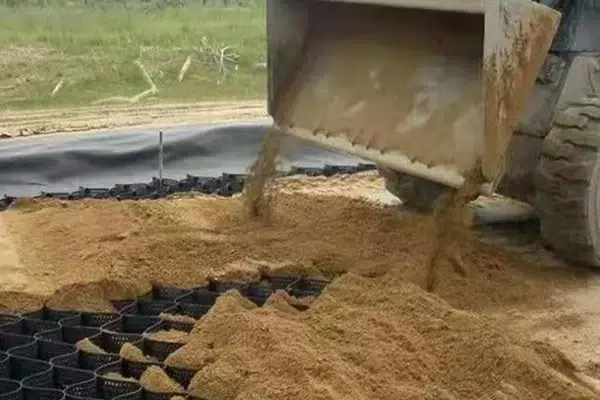
Anchoring and infill placement are as important as the panel itself. The project should define anchor type and pattern, panel expansion, crest and toe treatment, infill sequence, compaction approach, and access for crews and equipment.
Panels should be expanded to the intended geometry and secured before heavy infill placement. A rushed installation can pull cells out of shape, leave unsupported areas, or create an uneven face that complicates the next layer. The method must follow the project drawing and the supplier’s applicable installation guidance.
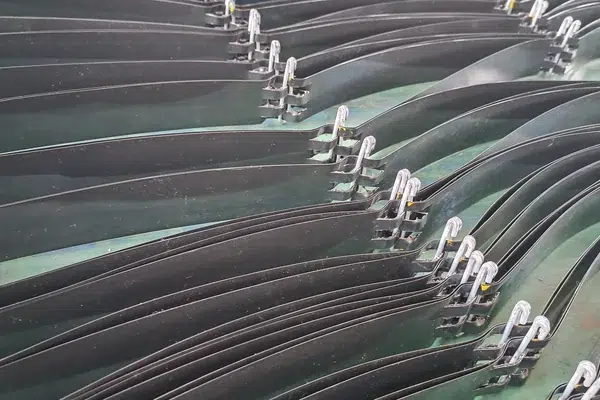
Field Note: Cell panels can look similar in stacked form while their dimensions, weld pattern, and handling behavior differ. Contractors should confirm the expanded coverage area and site layout before comparing a panel count or a container price.
What Risks Are Often Missed in Geocell Wall Projects?
Frequent risks include treating surface confinement as structural reinforcement, leaving drainage out of the wall discussion, selecting infill without checking the cell detail, and ordering panels before confirming anchor layout and expanded coverage.
For projects with surcharge loads, steep faces, saturated soil, weak foundations, or a requirement for long-term wall stability, the engineering review must go beyond product selection. A cellular panel may form one visible part of the solution while reinforcement layers, drainage, foundation preparation, and facing connections do the structural work.
Buyer Check: Request the data sheet, panel dimensions before and after expansion, stated material, weld information where specified, packaging, labels, batch traceability, anchoring accessories, loading plan, and required documents. Do not release the order until the supplier has the correct section drawing.
What Should Be Included in a Geocell Retaining Wall RFQ?
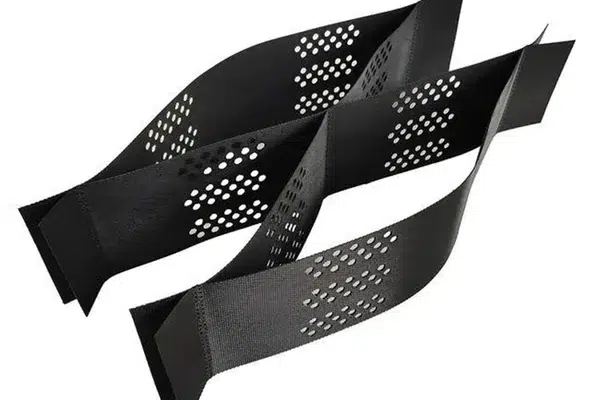
A geocell retaining-wall RFQ should include the application, face height and angle, wall or slope section, soil and drainage condition, design function, cell depth, panel dimensions, anchoring, infill, quantity, destination, and required test or design documents.
Add the expected construction sequence and whether the face is vegetated, gravel-filled, or covered with another material. Buyers can compare HDPE geocell options, review soil reinforcement applications, and use the technical RFQ form before finalizing the wall material list.
FAQs
Can geocell replace geogrid in a retaining wall?
Not automatically. Geocell and geogrid can serve different functions. The required wall reinforcement and facing system must follow the approved design and the intended load path.
How deep should geocell be for a retaining wall?
Cell depth depends on the project geometry, infill, surface function, anchoring, drainage, and design. A single depth should not be selected without the section detail.
What information should a supplier receive?
Send the section drawing, height, angle, soil, drainage, infill, cell-depth request, area, quantity, destination, anchor concept, and required documents.
Conclusion
Geocell can be a strong surface-confinement component in the right wall or slope detail. Confirm geometry, drainage, anchoring, infill, and structural responsibility before selecting a panel.